

The AI market has reached nearly $300 billion worldwide and it is expected to grow exponentially. What started with ChatGPT has exploded into a wide range of platforms that support content creation, research, analytics, and workflow automation. ChatGPT introduced millions of professionals to generative AI.
With nearly 200 million visits every day, ChatGPT is deeply embedded into everyday workflow. While it remains one of the most powerful platforms, ChatGPT is not the only player in the game. Hundreds of AI tools launch every month, and teams need to decide which platforms add value and which introduce unnecessary complexity.
Choosing the Right Tools
Before adopting more technology, it’s vital for marketing leaders to map their current workflow and identify the functions that need improvement. This includes defining wither the top priority is better content development, deeper research, improved data analysis, or workflow automation. Clear criteria help teams avoid overspending and reduce the risk of tool fatigue.
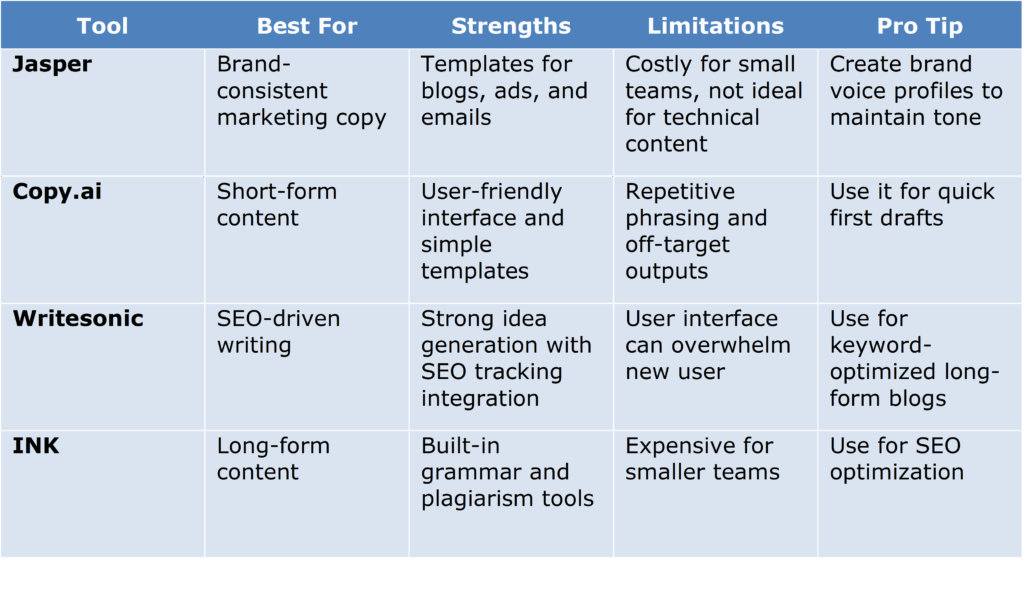
AI Tools for Content Creation
Avoid overwhelm by selecting one tool for external copywriting and one for internal ideation. This approach supports consistency across campaigns, reduces redundancy, and protects brand voice. The key is to simplify content creation rather than complicate it.
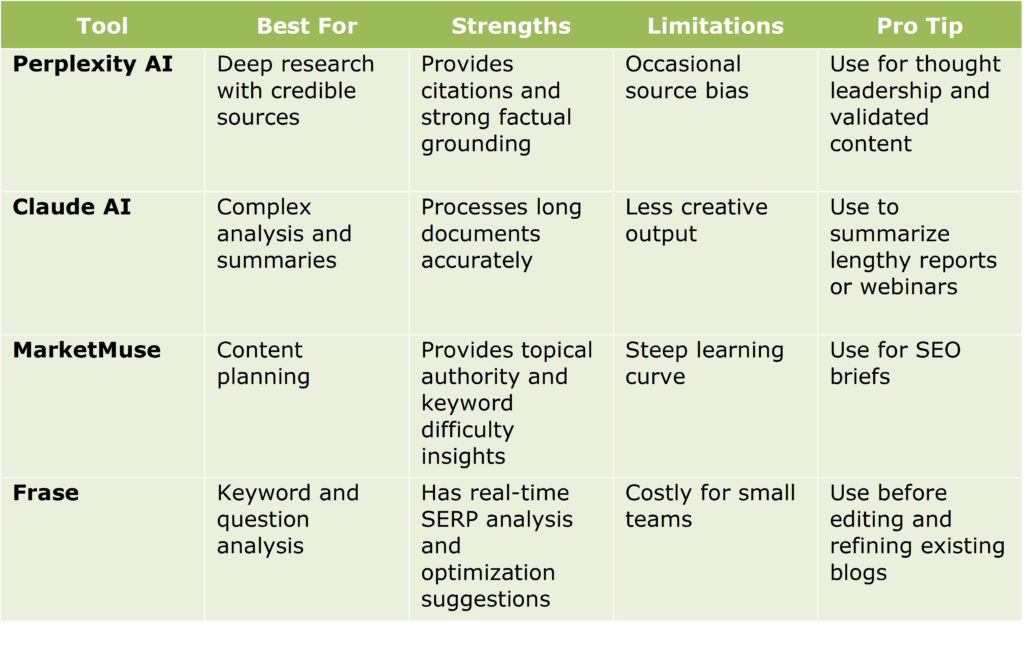
AI Tools for Research
Generative AI can produce content quickly, but strong marketing depends on credible information. This is where specialized AI research tools come in. These tools help marketers move beyond surface-level information to uncover accurate, source-backed insights.
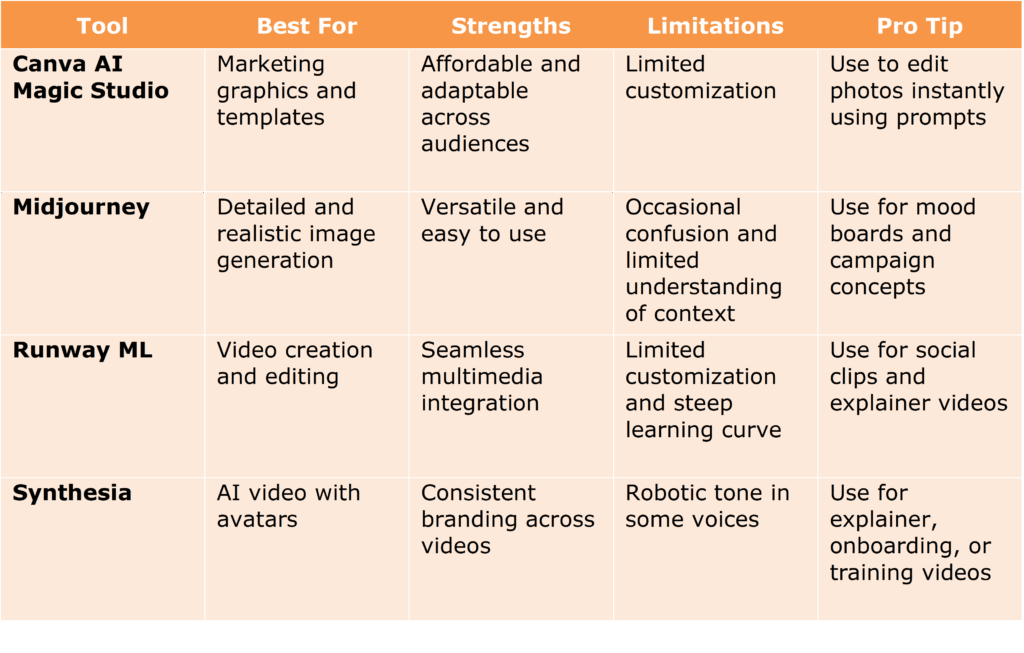
AI Tools for Visual and Multimedia
AI makes visual storytelling faster than ever by producing graphics, photos, and videos. From automated design platforms to text-to-video generators, these tools help marketing teams scale visual campaigns without a full production crew or studio. Still, it’s vital for marketers to use AI visuals as draft concepts, then refine them with a designer to maintain brand quality.
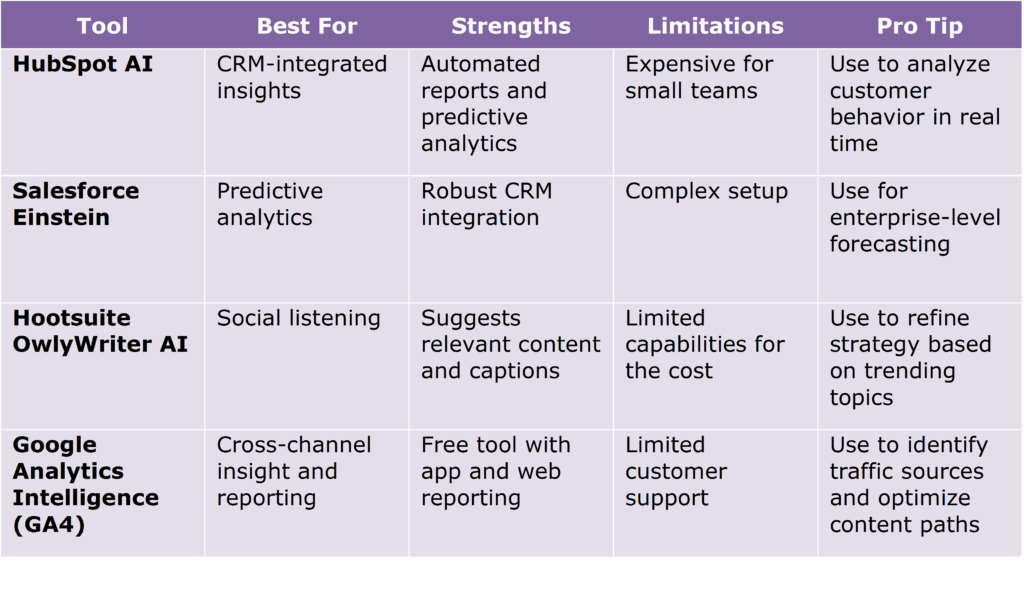
AI Tools for Analytics and Optimization
AI-powered analytics platforms can turn performance data into predictions, recommendations, and smarter decision-making. Assign at least one analyst to interpret insights and translate them into actionable campaign tweaks.
AI Tools for Workflow and Automation
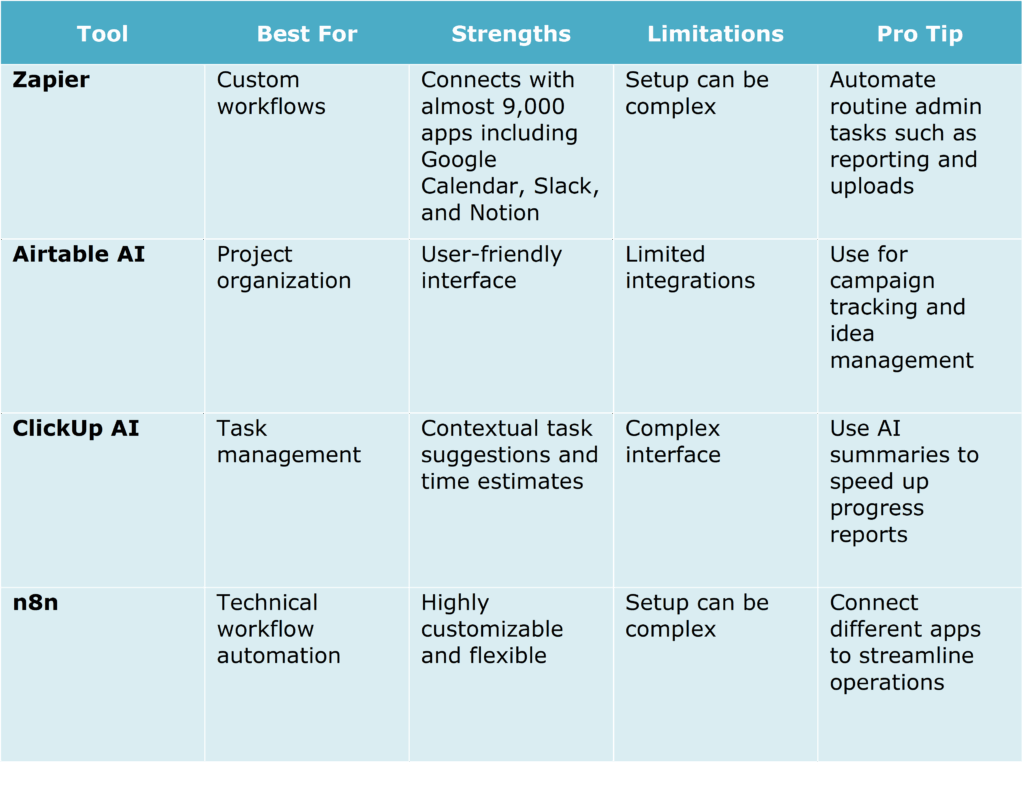
Automation improves ROI by reducing low-value manual work, improving consistency, and supporting real-time collaboration. This helps teams to focus on strategic, creative, and revenue-driving initiatives. AI-powered workflow tools can streamline everything from reporting and task assignment to cross-platform publishing and CRM access.
Turn AI Awareness Into Operational Advantage

As the AI market expands, marketers gain a real competitive advantage by selecting the tools strategically. Marketing teams don’t need to implement every platform available. Instead, pilot one tool per category, measure its impact, and scale what works. High-performing organizations treat AI like an operational ally by clarifying needs, maintaining oversight, and building a tech stack that fuels sustained growth.